
A missed call. A text already on its way.
Missed call text back does one simple job. When you can't answer, the caller gets a text from you within seconds, so they know you're real and you're coming back to them. Instead of ringing the next name on Google, they reply with what they need. Here's how a missed call could look.
A call comes in
You're on a roof and can't answer.
MissedA text goes out from you
Sorry I missed you. What's the job and the postcode?
SentThe customer replies
Leak under the kitchen sink, WF1. Not urgent.
RepliedYou call back, prepared
You know the job before you dial.
Yours
An illustrative example. Not a real customer. The wording and timing are agreed with you first.
It's the smallest of the automations I build for trades, and often the one that pays for itself first.
What the text actually says
The text is short, sounds like you, and asks for one thing. It isn't an advert. Say you're Dave at Brookfield Plumbing. During working hours it might say:
"Hi, it's Dave at Brookfield Plumbing. Sorry I missed your call, I'm on a job. What do you need doing, and what's the postcode? I'll ring you back as soon as I'm off the tools."
In the evenings and at weekends, something different:
"Hi, it's Dave at Brookfield Plumbing. Sorry I missed you, I've finished for the day. If water's coming through, turn off your stopcock and reply URGENT. Otherwise send me the job and postcode and I'll call you first thing."
A few rules I stick to when writing them:
- From a number they can reply to. A text from a business name like "BROOKFIELD" looks smart but can't be replied to, which defeats the point. It comes from your number, or a number that forwards replies to you.
- One question. The job and the postcode. Ask for five things and people answer none.
- No promises you can't keep. "I'll ring you back soon", not "I'll be with you in an hour".
- Short. A text over 160 characters is sent and charged as two or more parts, and long ones get skimmed anyway.
- No offers. The ICO treats a message sent purely for customer service as a service message, not marketing. Tack "10% off boiler services this month" on the end and it becomes direct marketing, with stricter consent rules.
For an emergency trade, the urgent keyword matters most. A reply of URGENT can fire an alert to your phone that's harder to ignore than a normal text, so a genuine leak gets you, and a dripping tap waits until Monday.
How missed call text back works
Behind the scenes it's simple, and it fits around the phone you already use.
The system spots the missed call
Either your business number tells it when a call goes unanswered, or your mobile diverts calls you don't pick up (busy, no answer or no signal) to a number it watches. You choose how long the phone rings first.
It checks who rang
Mobiles get a text. Landlines and withheld numbers can't, so they're flagged for you to ring back. Numbers on your never-text list, like suppliers and family, are skipped.
The right text goes out
Working hours, evenings, weekends or holidays each get their own wording. Each number gets one text, even if they ring three times in five minutes.
Replies come to you
Replies land on your phone, and every missed call and reply is logged, so the job you meant to ring back on Friday doesn't vanish into your call history.
That's the auto text reply to missed calls in full. No app for you to learn and nothing for customers to download.
Why replying fast matters, and what the evidence really says
Think about the last time you needed someone urgently. You rang the first name. No answer. You rang the second. Whoever got back to you first usually got the job, and the first firm never knew they'd lost it.
The best-known research on response speed backs that up, with caveats. In 2011, Harvard Business Review published a study by James Oldroyd, Kristina McElheran and David Elkington. In an audit of 2,241 US companies, only 37% responded to a web enquiry within an hour, and the average response time among those that replied within 30 days was 42 hours. A separate analysis of 1.25 million leads found firms that made contact within an hour were nearly seven times as likely to qualify the lead as those that waited an hour longer, and more than 60 times as likely as those that waited 24 hours or more.
The caveats are real. That's American companies, web forms rather than phone calls, and it's over a decade old. Nobody has run the same study on UK plumbers. But the direction matches what every trade already knows: a customer with a problem doesn't wait long.
A text within seconds doesn't win the job on its own. What it does is buy you time: the customer knows a real person has seen their call, and plenty will wait an hour for you rather than start again with someone new.
What the build includes
01
Texts written in your voice
Versions for working hours, evenings, weekends and holidays, approved by you before anything sends.
02
Connected to your phone
Set up on your existing mobile or business number wherever your provider supports it. No new number for customers to learn.
03
Rules that stop it being annoying
Mobiles only, one text per caller, a never-text list and an urgent keyword that alerts you.
04
A log of every missed call
Missed calls, texts and replies in one place, so you can see who still needs ringing back.
A useful starting point.
For trades who miss calls while working and want the caller to wait for them, without paying for a full answering service.
What I'll need to understand
- Which phone your customers ring, and who your provider is
- Your working hours and what counts as urgent
- Where you'd like replies to land
What missed call text back costs
Missed call text back is cheap to run. The costs are the texts themselves and, depending on your set-up, a number for the system to watch.
- Texts: Twilio, one of the biggest messaging providers, lists outbound texts to UK mobiles at US$0.056 per message part as of October 2026, which is roughly 4p to 5p a text. A hundred missed calls a month is a few pounds.
- A number: where one's needed, Twilio lists UK numbers at US$1.15 (local) to US$2.50 (mobile) a month.
- Diverted calls: if calls divert from your mobile, check what your network charges for diverted calls on your tariff.
Some business phone apps and CRM systems include a missed-call text feature. If you already pay for one that does, switch it on and keep your money. I'll tell you if that's the case.
What it costs with me
You get a fixed quote before any work starts: one figure for the set-up, and a stated monthly figure for running it, including the texts, monitoring and changes to the wording. It's often a small add-on to an AI receptionist or a quote follow-up build, and quoted that way if you want both.
Will it pay for itself? Do the sum with your own numbers. If one extra job a year covers the yearly cost, and you miss more than a couple of calls a week, it almost certainly will. If you rarely miss a call, you don't need it.
- Asking is not an order. No payment is taken here.
- I confirm the scope and the price in writing before anything is booked.
- It works as agreed, or I fix it at no extra cost.
Setting it up, step by step
Check how your calls come in
A mobile, a business VoIP line or a landline. This decides how the system spots missed calls, and it's the first thing I check before quoting.
Write the texts with you
Two or three versions in your words, with the urgent keyword if you take emergency work. You approve every one.
Connect and set the rules
The divert or the business line connected, the never-text list loaded, and replies routed to your phone.
Test with real calls
Missed calls from different networks, in hours and out of hours, until every version sends correctly and every reply reaches you.
Watch the first fortnight
I check the log for anything odd, like a supplier getting texts or a reply going astray, and fix it.
One thing worth knowing. In July 2026, Ofcom finalised new rules on business text messages, which make phone networks and text providers check who's sending and stop fake sender names. The business-messaging rules are due to apply from July 2027. For you it means using a reputable provider that checks you're a real business, and sending from your own number. That's how I set it up anyway.
Working as agreed, or fixed at no extra cost.
Before launch, what the automation does is written down and tested with you. If it doesn't do what's written down, I put it right without charging you for the extra work.
It guarantees the agreed process. It can't promise how customers respond, and it doesn't cover outages at the phone, text or software providers it connects to.
Miss the call, not the job.
Tell me which phone your customers ring and roughly how many calls you miss. I'll tell you whether missed call text back is worth setting up for you, and give you a fixed quote if it is.
Set up my missed call text back
- Asking is not an order. No payment is taken here.
- I confirm the scope and the price in writing before anything is booked.
- It works as agreed, or I fix it at no extra cost.
Works well alongside.
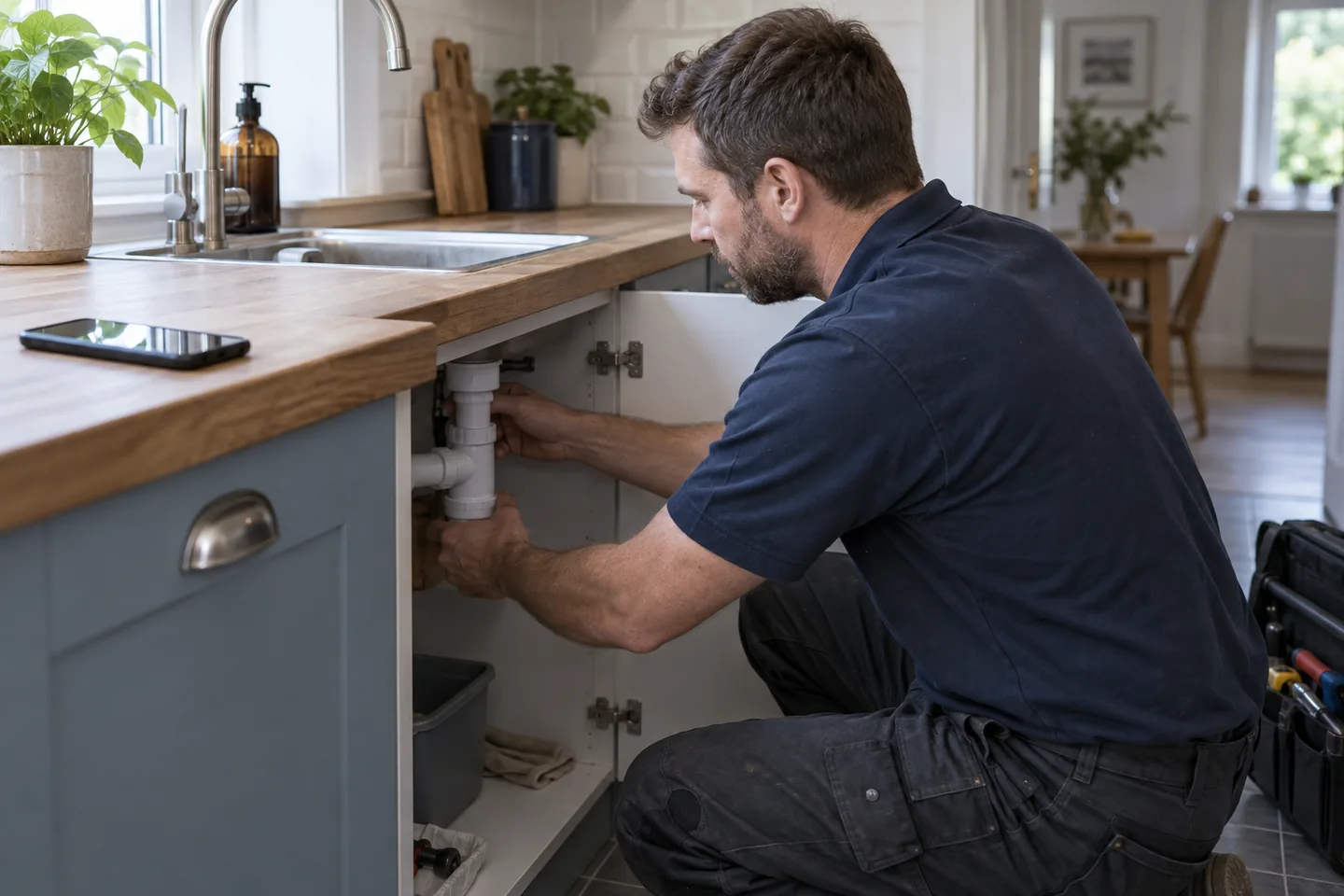 Win more customersAI receptionistCalls answered when you can't pick up. Details taken, emergencies sorted and the enquiry passed straight to you.Explore this automation
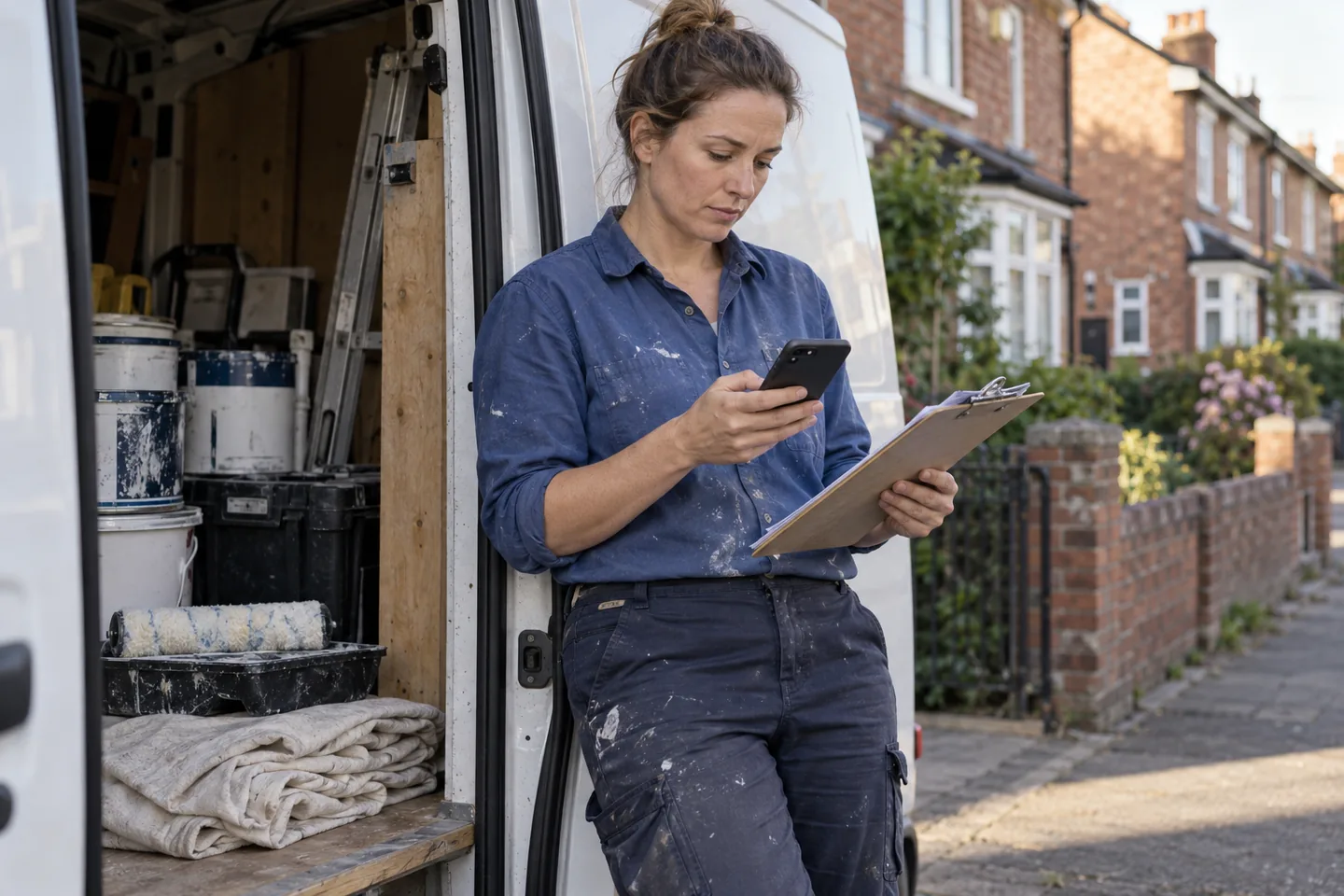 Get more from every enquiryCustomer follow-upQuick replies to new enquiries, quotes chased and past customers reminded. You approve the messages. The system keeps them going.Explore this automation
The details that matter.
What does missed call text back cost?
The running costs are small: texts to UK mobiles cost a few pence each through the big messaging providers, plus a pound or two a month for a number if you need one. I quote the set-up as a fixed price before any work starts, along with a stated monthly figure for running it. If a tool you already pay for has it built in, I'll tell you to switch that on instead.
Does it work with my mobile?
Usually, yes. Most UK mobile networks let you divert calls when you're busy, don't answer or have no signal, and that divert is what lets the system spot a missed call. If you use a business phone app or a VoIP line, it's often simpler still. I check your set-up before quoting.
Can it text people who ring from a landline?
No, and it shouldn't try. Texts only make sense to mobile numbers, the ones starting 07. Landline and withheld callers are flagged in your summary so you can ring them back yourself.
Is an auto text reply to a missed call legal?
Yes, when it's done properly. The ICO treats messages sent purely for customer service as service messages rather than direct marketing, and a reply to someone who has just rung you fits that. Add an offer or a promotion and it becomes marketing, with stricter rules, so the text sticks to the job.
Will it text my supplier or my mum?
Not if you don't want it to. You keep a list of numbers it never texts, and it won't text the same number twice in a short space of time, so someone who rings three times in five minutes gets one text, not three.
Can I change what the text says?
Yes. You approve every version before it goes live, and changing the wording later is part of what I look after. Most trades end up with two or three versions: working hours, evenings and weekends, and holidays.
Can WhatsApp Business do this for free?
Not quite. WhatsApp Business can send an away message, but it replies to WhatsApp messages, not to phone calls you miss on your normal number. Missed call text back reacts to the call itself.
Should I have this or an AI receptionist?
If you miss a few calls a day and mostly need callers to wait for you, a text back is often enough. If you miss a lot, take emergency calls out of hours or want calls answered and sorted there and then, look at an AI receptionist. Plenty of trades use both, with the text going to anyone who hangs up.